What Are Full-Mouth Dental Implants? What You Should Know Before Choosing Them

If you’re missing most or all of your teeth, you might be considering full-mouth dental implants. But what exactly are they, and how do they work?
Full-mouth dental implantsThis link leads to Dental Implants page are a comprehensive solution for replacing an entire arch with false teeth, restoring both the function of your bite and the appearance of a natural smile.
At Burgmeier DentistryThis link leads to Home page in Mason City and St. Ansgar, Dr. Kyle Burgmeier, Dr. Joe Burgmeier,This link leads to Doctors’ page and our team are here to provide you with everything you need to know before making this important decision. Let’s dive in!
What are full-mouth dental implants?
Full-mouth dental implantsThis link leads to Dental Implants page are a permanent solution to replacing most or all of the teeth in your upper or lower jaw, or both. The first step in the full-mouth dental implant process is an initial consultation and evaluation of the patient’s oral health.
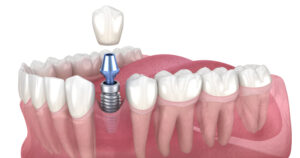
Instead of relying on traditional dentures, full-mouth implants use titanium posts placed in the jawbone as artificial tooth roots. Dental implant surgery involves placing these posts into the jawbone, where they act as artificial tooth roots, and this is a key part of the dental implant procedure. These posts support prosthetic teeth that look and function like natural teeth, providing a stable, durable solution.
Full dentures or removable prosthetics can also be supported by implants, offering a more stable alternative to conventional dentures. Implant dentistry is a specialized field focused on these procedures. In addition to stability and durability, full-mouth dental implants help with bone preservation by stimulating bone growth, unlike conventional dentures, which do not support the jawbone and can lead to bone loss over time.
Full-mouth implantsThis link leads to page can be life-changing, restoring not only your smile but also your ability to chew, speak, and live with confidence. Full-mouth dental implants typically require a multi-step process, including consultation, implant placement, and final prosthetic placement.
Types of full-arch dental implants
When it comes to restoring an entire arch of missing teeth, there are several types of full-arch dental implantsThis link leads to Dental Implants page to consider. Each option is designed to meet different needs and preferences, ensuring you get the best solution for your smile.
- All-On-4: This innovative approach uses just four dental implants strategically placed in the jawbone to support a full arch of prosthetic teeth. All-On-4 is a popular choice for its efficiency and cost-effectiveness, providing a secure, natural-looking result with fewer implants.
- All-On-6: For patients who need extra support, the All-On-6 method involves placing six implants in the jawbone. This offers enhanced stability for the prosthetic teeth, making it ideal for those with greater bone density or more complex dental needs.
- Implant-supported dentures: Unlike traditional dentures, implant-supported dentures are anchored to dental implants for a much more stable fit. These dentures can be removable, allowing for easy cleaning and maintenance, while still providing the comfort and confidence of a secure bite.
Whether you’re looking for a fixed full-arch solution or the flexibility of removable implant-supported dentures, there’s a full-arch dental implant option to suit your lifestyle and restore your ability to eat, speak, and smile with confidence.
Why should I choose full-mouth dental implants?
Full-mouth dental implantsThis link leads to Dental Implants page are ideal for patients who struggle with dentures or have multiple missing teeth. If you’ve experienced tooth loss from decay, disease, or injury, this treatment offers several advantages, including:
- Durability: Full-mouth implants are built to last a lifetime with proper care.
- Comfort: No more worries about ill-fitting dentures or adhesives. Full-mouth dental implants allow for a wider range of food choices, giving you greater dietary freedom and the ability to enjoy your favorite foods without discomfort or restrictions.
- Natural appearance: Full-mouth implants look and feel like natural teeth. They also help prevent bone loss, which is common with missing teeth, by stabilizing the jawbone and preserving facial structure.
The procedure requires skilled professionals and advanced technology for optimal results.
At Burgmeier DentistryThis link leads to Home page, Dr. Kyle Burgmeier and Dr. Joe BurgmeierThis link leads to Doctors’ page offer personalized consultations for patients in Mason City and St. Ansgar to help determine if full-mouth implants are the right solution for you.
Patients with full-mouth dental implantsThis link leads to Dental Implants page experience a significant boost in quality of life, including improved self-confidence and the ability to enjoy favorite foods. Studies show that patients report improved confidence and quality of life compared to those with traditional dentures.
What is the procedure for full-mouth dental implants?
Before the main implant surgery, preliminary procedures such as bone grafting may be necessary to prepare the jawbone. Additional procedures, like sinus lifts, may also be required to ensure successful placement of full-mouth dental implantsThis link leads to Dental Implants page.
The full-mouth implant procedure typically involves placing 4-6 titanium posts into your jawbone. These posts act as artificial tooth roots. Any remaining teeth are usually extracted prior to or during the implant surgery to prepare the jaw for implant placement.
Once they heal, your dentist will attach a full arch of prosthetic teeth. Temporary teeth or temporary prosthetics may be placed during the healing period to maintain basic function and appearance.
This procedure is often performed in a single day, but the healing process can take several months. The healing time allows the titanium posts to fuse with the jawbone in a process called osseointegration.
The healing period, during which the implants heal and integrate with the jawbone, typically lasts 3 to 6 months. This step ensures the stability of the implants and allows for the restoration of function and aesthetics.
Full-mouth dental implantsThis link leads to Dental Implants page typically require a multi-step process, including an initial consultation, implant placement, and final prosthetic placement.
Are full-mouth dental implants painful?
Many patients worry about pain when considering full-mouth dental implantsThis link leads to Dental Implants page. The good news is that the procedure itself is not typically painful, thanks to the use of local anesthesia. During the procedure, you will be completely numb, so you won’t feel sharp pain, though some pressure or vibration is normal.
Dr. Kyle Burgmeier, Dr. Joe Burgmeier,This link leads to Doctors’ page and their team ensure your comfort throughout the procedure. Afterward, you may experience some soreness or discomfort as the area heals, but this is usually mild and can be managed with over-the-counter pain relief.
What is the recovery time after full-mouth implants?
Complete recovery from full-mouth implants can take several months. However, many patients report that the recovery is much easier than expected.
Immediately after the procedure, you may experience some swelling, bruising, or mild discomfort, which will subside over time.
During the healing phase, you’ll be given aftercare instructions, including dietary restrictions and oral hygiene tips, to ensure proper healing.
Most patients can return to normal activities within a few days, but should avoid strenuous exercise until fully healed.
How long do full-mouth dental implants last?
Full-mouth dental implantsThis link leads to Dental Implants page are designed to last a lifetime with proper care. Unlike traditional dentures, which may need to be replaced over time, full-mouth implants provide a long-term solution to tooth loss. They also help preserve jawbone structure, preventing bone loss that can occur with missing teeth.
If you maintain a good oral hygiene routine and attend regular checkups, your implants can last many years, or even a lifetime.
Do I need bone grafting for full-mouth implants?
In some cases, bone grafting may be necessary before full-mouth dental implantsThis link leads to Dental Implants page can be placed. This is often required if your jawbone has become too thin or weak dfrom tooth loss or gum disease. Bone grafting helps rebuild the jawbone, providing a stable foundation for the implants.
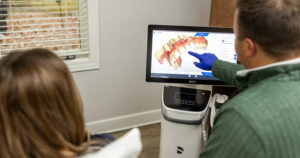
At Burgmeier DentistryThis link leads to Home page, Dr. Kyle Burgmeier and Dr. Joe BurgmeierThis link leads to Doctors’ page use advanced 3D scans to evaluate your jawbone and determine whether bone grafting is needed. Many patients are pleasantly surprised to find they can still be candidates for full-mouth implants.
Are full-mouth implants better than traditional dentures?
Full-mouth implants offer several advantages over traditional dentures:
- Stability: Implants are securely anchored in the jawbone, so they won’t slip or move. Full-mouth dental implants also help prevent bone recession and promote bone preservation, unlike traditional dentures.
- Comfort: Implants eliminate the need for adhesives and the discomfort of removable dentures. Traditional dentures often require adhesives to stay in place, while implants do not.
- Functionality: You can eat, speak, and smile without worrying about your teeth shifting. Full-mouth dental implants can restore over 70% of natural bite force, while traditional dentures and removable prosthetics typically do not.
Traditional dentures can be uncomfortable and require adjustments over time. Full-mouth implants, on the other hand, provide a permanent solution that feels just like natural teeth.
What are the benefits of full-mouth dental implants?
Full-mouth implants offer several key benefits:
- Improved function: You can enjoy your favorite foods again without restrictions.
- Enhanced appearance: Implants provide a natural, youthful look.
- Long-term solution: Unlike dentures, implants don’t need to be replaced frequently.
At Burgmeier DentistryThis link leads to Home page, we focus on providing personalized care to ensure the best results for patients in Mason City and St. Ansgar.
Will I be able to eat normally with full-mouth implants?
Yes! Full-mouth implants restore your ability to eat most foods without the discomfort of traditional dentures. Since the implants are securely anchored in your jaw, they function just like your natural teeth, allowing you to chew comfortably and confidently.
What are the risks of full-mouth dental implants?
As with any surgical procedure, full-mouth implants carry some risks. These can include infection, implant failure, or nerve damage. However, these risks are rare, and Dr. Kyle Burgmeier and Dr. Joe BurgmeierThis link leads to Doctors’ page take great care to minimize them through careful planning and execution.
How long does it take for the implants to heal?
Healing time varies, but most patients experience a smooth recovery. The initial healing phase lasts 1-2 weeks, during which the gums heal. After that, the osseointegration process typically takes 3 to 6 months.
How do I care for my full-mouth implants?
Caring for full-mouth implants is similar to caring for natural teeth. Brush twice a day and floss regularly, avoid hard foods, and visit Burgmeier DentistryThis link leads to Home page for routine checkups to ensure your implants remain in good condition.
Advances in full-mouth dental implant technology
The field of full-mouth dental implants has seen remarkable advancements in recent years, making the process more precise, comfortable, and successful than ever before. These innovations ensure that your new teeth not only look natural but also function seamlessly.
- CBCT guided surgery: Using advanced 3D imaging, CBCT guided surgery allows for highly accurate implant placement. This technology helps your dentist plan the procedure in detail, reducing the risk of complications and ensuring the best possible fit for your implants.
- Digital dentistry: With the help of computer-aided design (CAD) and computer-aided manufacturing (CAM), your prosthetic teeth and implant-supported dentures are custom-crafted for a perfect fit. Digital impressions mean less time in the chair and more natural-looking results.
- Enhanced osseointegration: Modern materials and techniques have improved the way dental implants integrate with the jawbone. This creates a stable foundation for your new teeth, helping to preserve bone and maintain your facial structure.
Thanks to these technological advances, full-mouth dental implant procedures are more predictable and comfortable, giving you a beautiful, functional smile that lasts.
The importance of choosing a qualified dentist
Selecting the right dentist is one of the most important steps in your full-mouth dental implants journey. The expertise and experience of your provider can make all the difference in achieving a successful, long-lasting result.
Full-mouth dental implant success stories
Full-mouth dental implants have changed the lives of countless patients, offering a permanent solution to missing teeth and restoring both function and confidence. Many patients who once struggled with eating, speaking, or smiling now enjoy a renewed sense of well-being.
- Improved chewing function: With full-mouth dental implants, patients can enjoy a wide variety of foods again, without the worry of slipping dentures or dietary limitations.
- Enhanced smile: The natural appearance of mouth dental implants helps patients feel more confident in social and professional settings, allowing them to smile freely.
- Long-term durability: With proper care, dental implants can last for decades, making them a reliable, permanent solution for tooth loss and eliminating the hassle of frequent replacements.
These success stories highlight the transformative power of full-mouth dental implants—not just for your oral health, but for your overall quality of life. Many patients find that investing in implants is an investment in their happiness and self-esteem.
Ready for Your New Smile?
Full-mouth dental implants offer a permanent, reliable solution for patients missing most or all of their teeth. They provide numerous benefits, including improved functionality, appearance, and oral health. Whether you’re tired of dealing with loose dentures or simply want a long-term solution to missing teeth, full-mouth implants may be the right option for you.
Dr. Kyle and Dr. Joe Burgmeier,This link leads to Doctors’ page and the team at Burgmeier DentistryThis link leads to Home page in Mason City and St. Ansgar are ready to help you explore your options and determine if full-mouth implants are the best fit for your needs. Reach out to us today to schedule your personalized consultation.
Have additional questions regarding full-mouth dental implants? Feel free to share them in the comments below. We’d love to answer them and guide you through your dental implant journey!
Key Takeaways:
- Full-mouth dental implants provide a permanent, stable solution for replacing multiple missing teeth.
- The procedure involves placing titanium posts into the jawbone and attaching prosthetic teeth.
- Full-mouth implants offer comfort, natural appearance, and long-lasting results compared to dentures.
- Bone grafting may be needed if your jawbone is too thin, but modern technology makes it a smooth process.
- Recovery time is manageable, and the implants can last a lifetime with proper care.